

Ask a Question

Notice Independent plumbing education, not a plumbing contractor. Work beyond basic maintenance belongs with a licensed plumber. Read the full notice

Guide 02 / How it works

Plumbing Traps and Vents Explained

A few inches of standing water and a pipe through the roof are all that keep sewer gas out of your house. Here is how they work together, and what that gurgle is telling you.

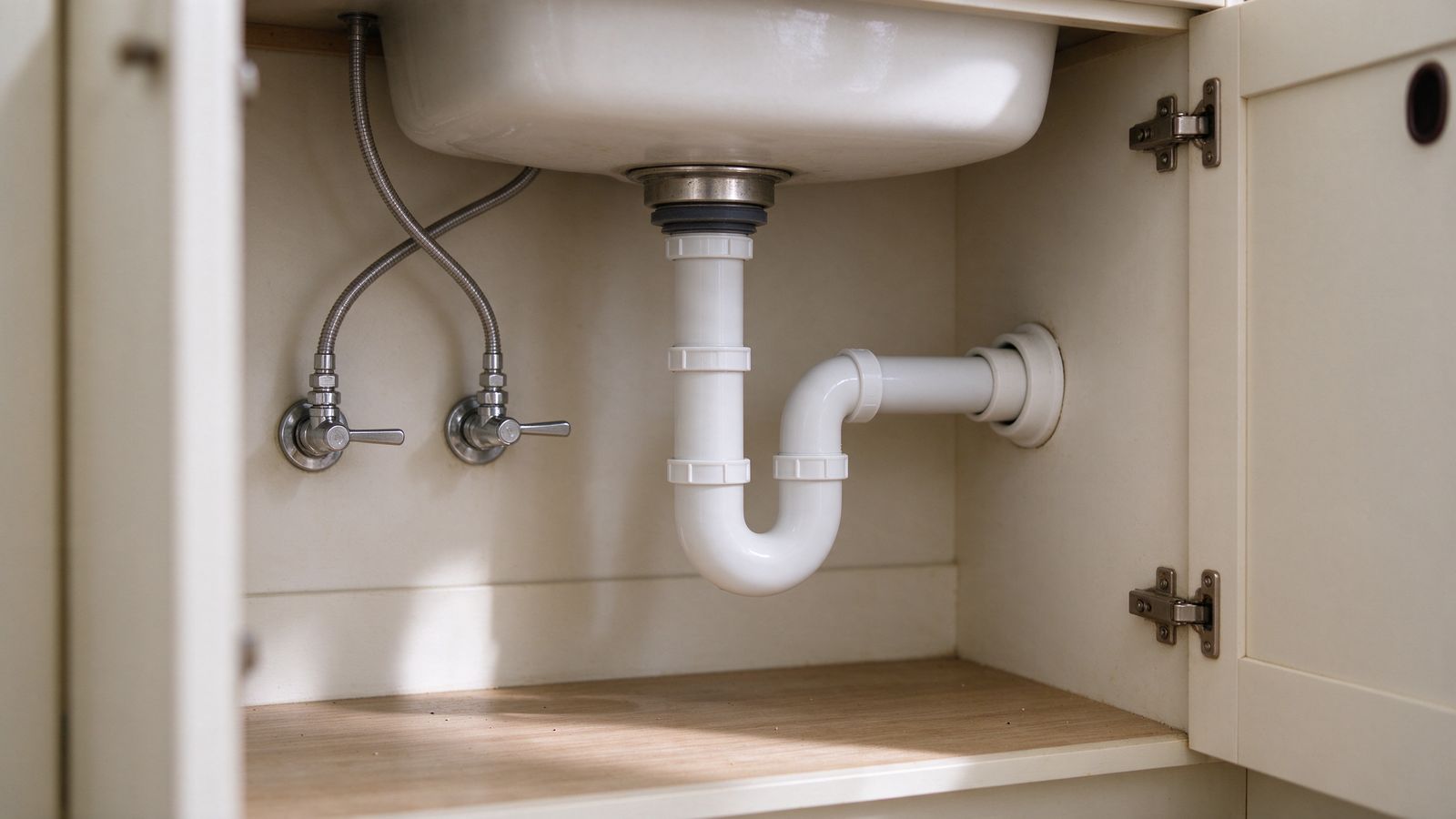
Open the cabinet under any sink and you will see a pipe that dips down and back up before it heads into the wall. That dip is the trap. Look at the roof of almost any house and you will find one or more pipes sticking up. Those are vents. The two parts work as a team: the trap holds a water seal against the sewer, and the vent protects that seal from being sucked away.

The Water Seal Is the Whole Point

Drain lines connect your house to the sewer or septic tank, and that connection is full of gases you do not want indoors. A trap solves the problem with nothing but geometry. Water flows through the dip, and when the flow stops, some of it stays behind in the bottom of the curve. That small pool, often around two inches deep, blocks gas from rising back into the room while still letting the next rush of water pass through.

Every fixture that drains into the system needs a trap. Sinks, tubs, showers, laundry standpipes and floor drains use a separate one, usually a P-trap, which is named for its shape lying on its side. A toilet has the trap built into the porcelain bowl, which is why there is always water sitting in it.

The S-trap problem

Older houses sometimes have S-traps, where the pipe drops straight down after the dip instead of running sideways into the wall. Falling water in that vertical leg can siphon the trap dry. Modern plumbing codes generally do not allow S-traps in new work, and inspectors commonly note them. Correcting one involves the vent and drain layout, so it is a plumber's job.

Anatomy of a P-Trap

A P-trap has four parts worth knowing by name, because inspectors and plumbers use them. The tailpiece drops from the sink drain. The U-bend holds the water seal. The trap arm runs from the bend to the wall, sloping slightly downhill. The trap weir is the high point inside the bend where water spills over into the trap arm; the depth of water below the weir is the seal.

Most under-sink traps are joined with slip nuts and washers, which is why a homeowner can usually remove one by hand to clear a clog or retrieve a ring. Put a bucket underneath first, and check that the washers seat properly when you reassemble it. If a slip joint drips after reassembly, or the trap is glued solid, call a plumber.

What Vents Do, and Why the House Needs Them

Picture water rushing down a drain like a piston in a cylinder. It pushes air ahead of it and leaves low pressure behind it. If nothing lets air in, that low pressure pulls on the water in nearby traps, and the seals get sucked down the drain. Vents connect the drain system to the outdoors so air can rush in instead.

A typical house has a main vent that continues up from the drain stack through the roof. Fixtures farther away connect to it through branch vents, sometimes called revents. Codes limit how far a trap can sit from its vent, which is one reason a remodel that moves a sink can get complicated.

Air admittance valves

An air admittance valve, or AAV, is a one-way valve that opens to let air into a drain when water flows and closes to keep gas in. You may find one under a kitchen island sink where a roof vent is impractical. Acceptance varies by jurisdiction and application, AAVs need to stay accessible, and they can wear out. If you notice a sewer smell near one, mention it to a plumber.

Why Drains Gurgle: Try the Diagnostic

A gurgle is air moving where it should not: bubbling back through a trap because water and air are competing for the same pipe. Two questions narrow down the cause. Answer both below for the most likely explanation, then read the matching section.
Gurgle diagnostic

Two Questions About the Gurgle

1. How many drains gurgle?
2. When does it happen?

One fixture + while it drains

A partial clog in that fixture's drain

When only one fixture gurgles while it drains, the usual cause is a buildup of hair, soap or grease narrowing that branch. Air gets trapped behind the slow water and burps back through the trap. Cleaning the stopper and the trap itself often fixes it; a clog past the trap arm is a job for a plumber.

One fixture + when another drains

A vent problem near that fixture

A trap that gurgles when a different fixture drains is often being siphoned, which points to a blocked, undersized or missing vent for that branch. Leaves, nests and debris can block a roof vent. Vent work is code work, so have a licensed plumber diagnose it.

Several fixtures + while it drains

A restriction in the main drain or sewer line

Several fixtures gurgling, especially the lowest ones in the house, suggests the problem is downstream where the branches meet: the stack, the building drain or the sewer lateral. Cut back on water use and call a plumber. A camera inspection is often the next step.

Several fixtures + when another drains

A main vent or main drain problem

Gurgles across the house when the washer empties or a toilet flushes suggest the system as a whole cannot move air: a blocked main vent or a partly obstructed main drain. This is diagnostic work for a licensed plumber, not a plunger.

The tool simplifies things on purpose. Real drains can have more than one problem at a time, and a gurgle after heavy rain can involve a municipal sewer that is surcharged rather than anything in your house. Use the answer as a starting point for a conversation with a plumber, not a verdict.

Sewer Smells: Usually a Seal, Sometimes a Leak

A sewer smell in a room nearly always means gas is getting past a seal somewhere. The common culprits are simple and some are easy to check yourself.

the smell comes from a basement floor drain or a guest bath nobody uses

The trap has probably evaporated. Pour in a few quarts of water; it often fixes the smell on the spot.

the smell is near a toilet base

The wax ring or toilet seal may have failed. Rocking toilets and stains around the base are warning signs. Call a plumber.

the smell comes and goes with wind or other fixtures draining

Suspect a vent issue or siphoning. Have a plumber check vents and trap arms.

the smell is strong, persistent and you cannot find a dry trap

A cracked drain, loose cleanout cap or vent pipe leak inside a wall is possible. That needs professional diagnosis, often with a smoke test.

Not every bad smell is sewer

A rotten-egg smell that is strongest at the hot tap can come from the water heater rather than a drain. And if anything smells like natural gas, leave the house and call your gas utility or 911 from outside. Do not hunt for it yourself.

Traps and Vents Questions

Can I pour drain cleaner into a gurgling sink?

Caustic chemical drain openers can damage some pipe materials and are hazardous if they splash back or if a plumber later opens the line. Many plumbers suggest trying a plunger or removing the trap first. If those do not work, it is time to call someone with a drain snake.

How often should I run water in an unused drain?

Evaporation depends on the climate and the room, but running water in seldom-used sinks, showers and floor drains every few weeks keeps the seal topped up. Some plumbers add a trap primer to floor drains so it happens automatically.

Is a gurgling toilet an emergency?

Not by itself, but a toilet that gurgles when other fixtures drain, or that bubbles while the washer empties, is pointing at a main drain or vent problem. If water starts backing up into a tub or floor drain, stop using water and call a plumber promptly.

Sheet 03 / Trap anatomy

The Four Parts of a P-Trap

Hover or tap each part. Inspectors and plumbers use these names, and knowing them makes a repair estimate easier to follow.

01 / Tailpiece

The straight drop from the drain

A short pipe from the sink or tub drain down into the trap. On kitchen sinks it may also receive a dishwasher drain or garbage disposal connection.

02 / U-bend

Where the water seal lives

The curved section that holds standing water after every use. Its depth is set by the trap design. Hair, grease and small objects collect here, which is why it is the first place to look in a slow sink.

03 / Trap weir

The spill point inside the bend

The high point water must flow over to leave the trap. The distance from the weir down to the bottom of the bend is the seal depth. Lose that water and the gas path opens.

04 / Trap arm

The sloped run to the wall

The horizontal pipe from the bend to the drain in the wall. It must slope gently downhill and stay within the distance codes allow from a vent, or the seal can be siphoned.

Sheet
03 / 05
Parts
04
Fixture
Sink or tub
Seal
Water

Tailpiece / U-bend / Trap weir / Trap armDWV / fixture trap

Still Hearing That Gurgle?

Tell us which drain, when it happens and what else is running. We will walk through the likely causes in general terms.

Ask a plumbing question