Finding Hidden Leaks with the Meter
EPA WaterSense estimates that household leaks can waste nearly 10,000 gallons of water a year in an average home, and many of those leaks are silent. Your water meter is the simplest way to find one. Turn off every fixture and appliance that uses water, including the ice maker and irrigation. Look at the meter: many have a small triangle or dial called a leak indicator that spins with even a tiny flow. Note the reading, wait an hour or two without using water, then check again. Any movement means water is going somewhere.
If the meter moves, check toilets first with the food coloring test, since they are the most common silent leak. If toilets are fine, close the main shutoff. If the meter still moves with the main closed, the leak may be on the service line between the meter and the house, which is a call to a plumber, and possibly your utility.
Private well?
No meter, but there are clues: a well pump that cycles on when nobody is using water points to a leak or a failing check valve. Note how often it runs and mention it to a well or plumbing professional.
Before a Freeze
Water expands as it freezes. In a pipe, that can build enough pressure to split the pipe, often somewhere other than the frozen spot, and the leak appears when it thaws. The usual weak points are outdoor faucets, pipes in exterior walls, unheated crawlspaces and garages, and supply lines under sinks on outside walls.
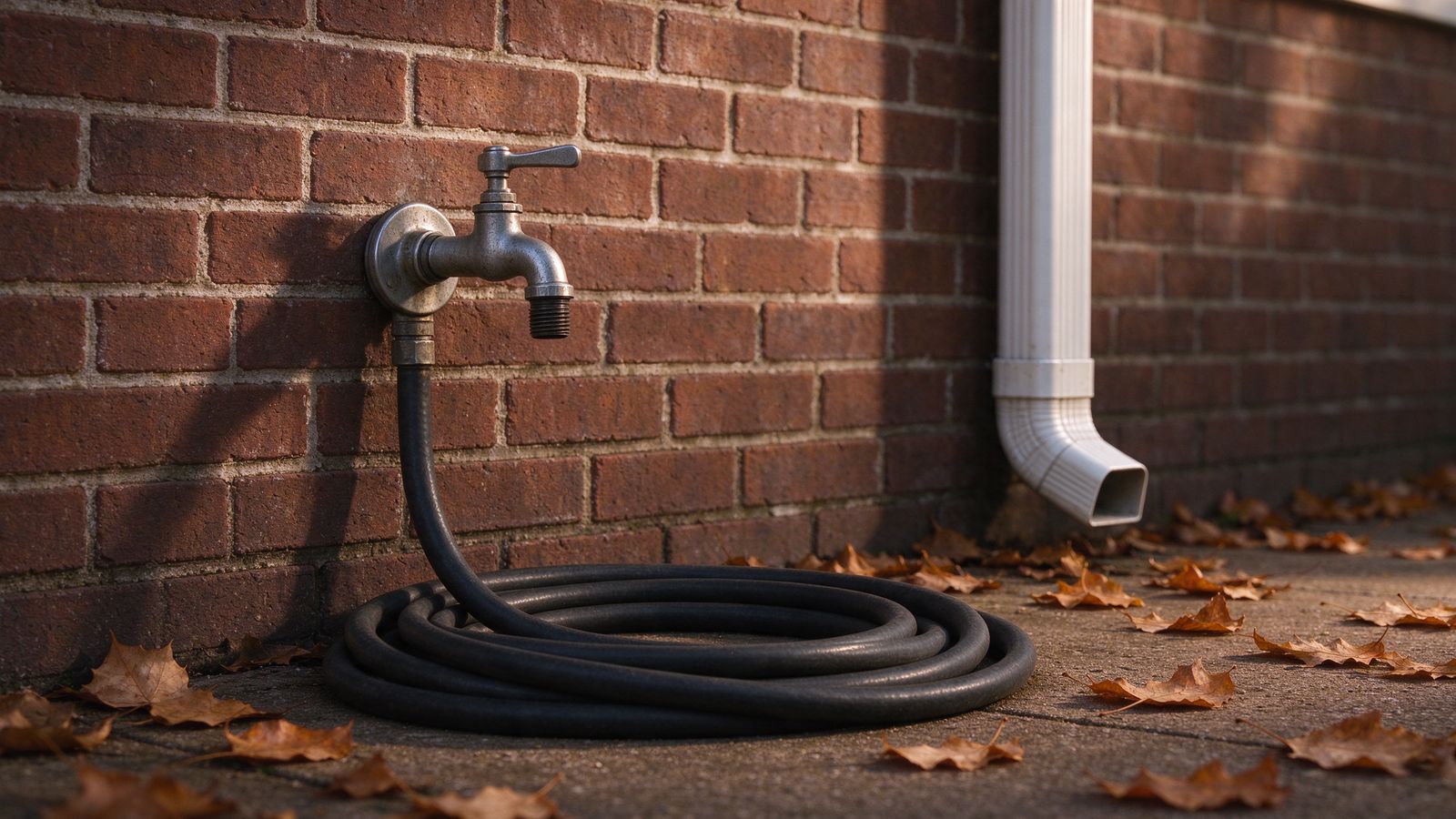
- Disconnect hoses. A hose left attached can trap water in the faucet, even on a frost-free sillcock.
- If outdoor faucets have an indoor shutoff, close it and open the outdoor faucet to drain the line.
- Insulate exposed pipes in unheated areas with foam sleeves.
- During extreme cold, opening cabinet doors on exterior walls and keeping the house heated help. Some people let a faucet drip on the coldest nights.
- If you leave the house in winter, keep the heat on and consider shutting the main and draining lines. Ask a plumber about winterizing a house that will sit empty.
If a pipe freezes, close the main shutoff before it thaws if you can reach it, and call a plumber. Never use an open flame to thaw a pipe.
Where Homeowner Maintenance Stops
Homeowner tasks versus work for a licensed plumber
| Usually fine for a homeowner | Call a licensed plumber |
|---|
| Cleaning aerators and showerheads | Replacing a shower mixing valve |
| Replacing a toilet flapper or fill valve | Resetting or replacing a toilet that leaks at the base |
| Clearing a sink trap by hand | Snaking main drains, sewer or camera work |
| Swapping a braided supply line with the stop closed | Replacing stops, main shutoffs or a PRV |
| Draining outdoor faucets | Repairing frozen or split pipe |
| Following the heater manual's owner checks | Anything involving gas, venting or a new water heater |
Permits and code
Many plumbing jobs require a permit and inspection, and some places require a licensed plumber by law. If in doubt, check with your local building department before you start.
Maintenance Questions
Should I use chemical drain cleaners for maintenance?
Routine use is generally not recommended. Caustic products can harm some pipes and are hazardous if a plumber later has to open the line. A drain strainer, keeping grease out of the kitchen sink and cleaning stoppers handle most prevention.
Do I need to flush my water heater?
Many manufacturers describe periodic flushing to remove sediment, particularly in hard-water areas. Follow your model's manual. If the drain valve is stuck or you are unsure, have a plumber do it.
How often should washing machine hoses be replaced?
Hose and appliance makers often suggest replacing them every few years or at the first sign of wear. Check your manuals and inspect them whenever you pull the machine out.