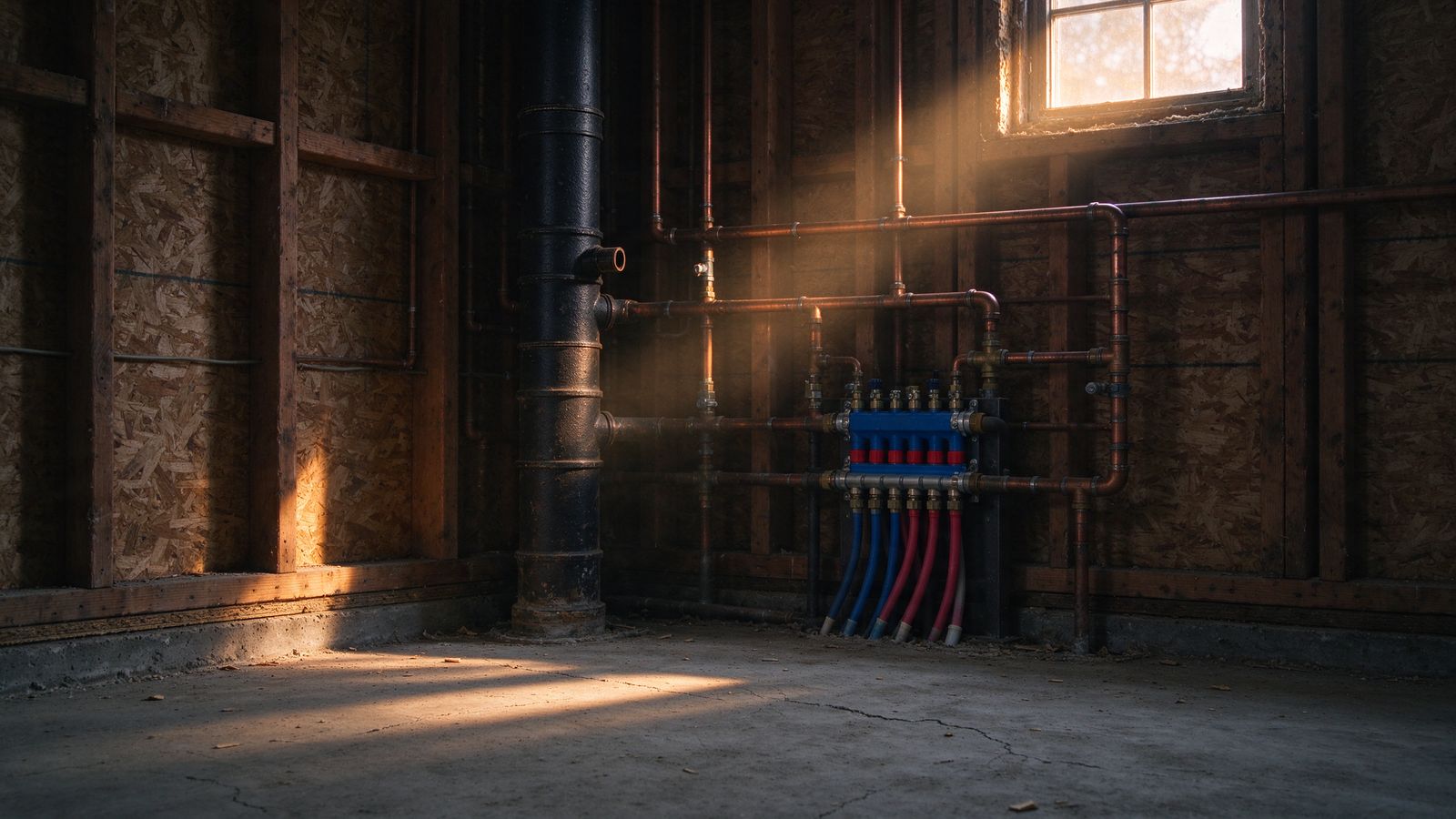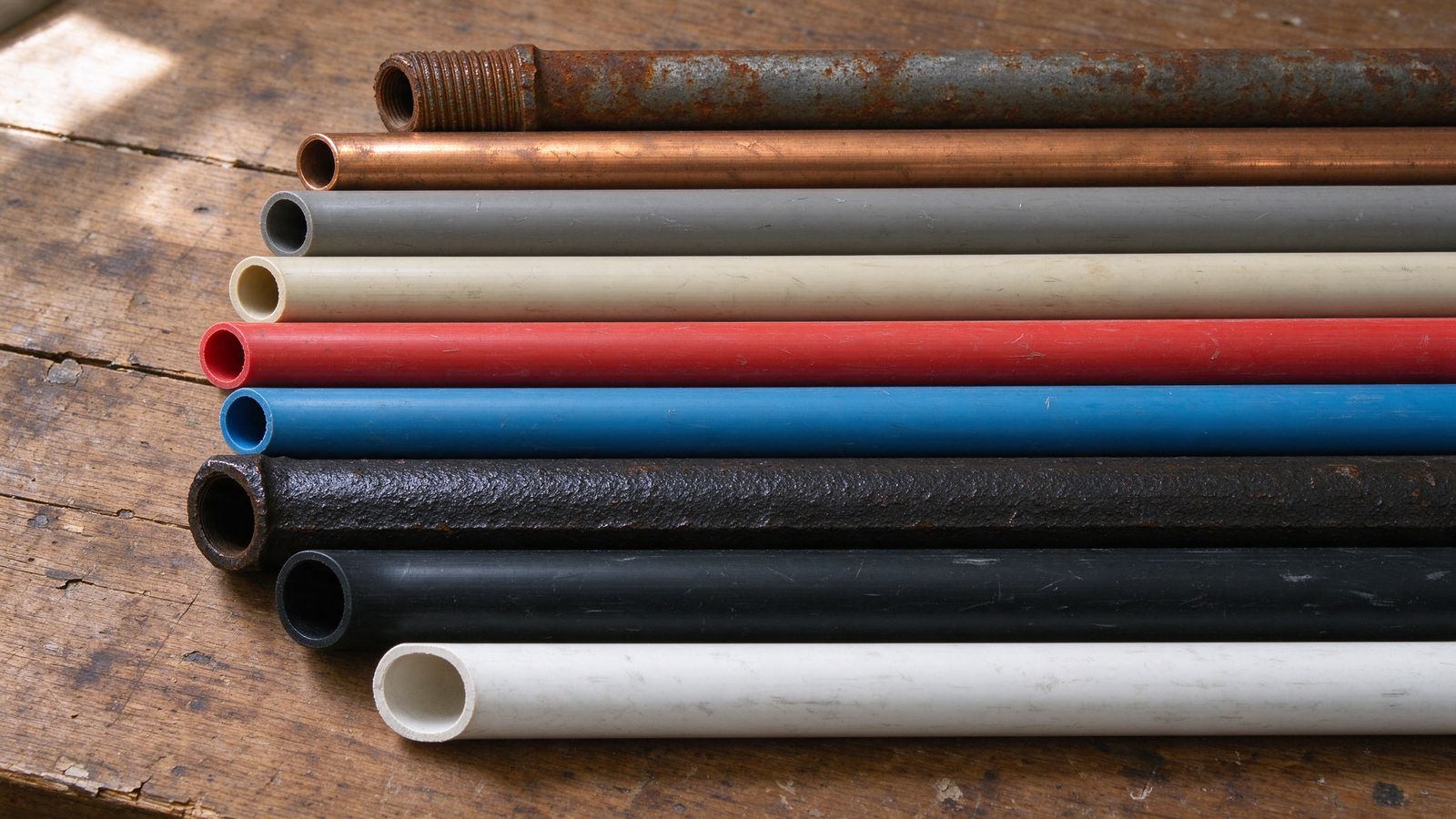
Most American houses contain more than one pipe material. A 1950s home may have galvanized supply lines, a cast iron stack, copper added during a remodel and PEX from a recent bathroom. Knowing which is which helps you read an inspection report, understand an insurance question and judge how urgent a plumber's recommendation really is.
Where to Look and What to Check
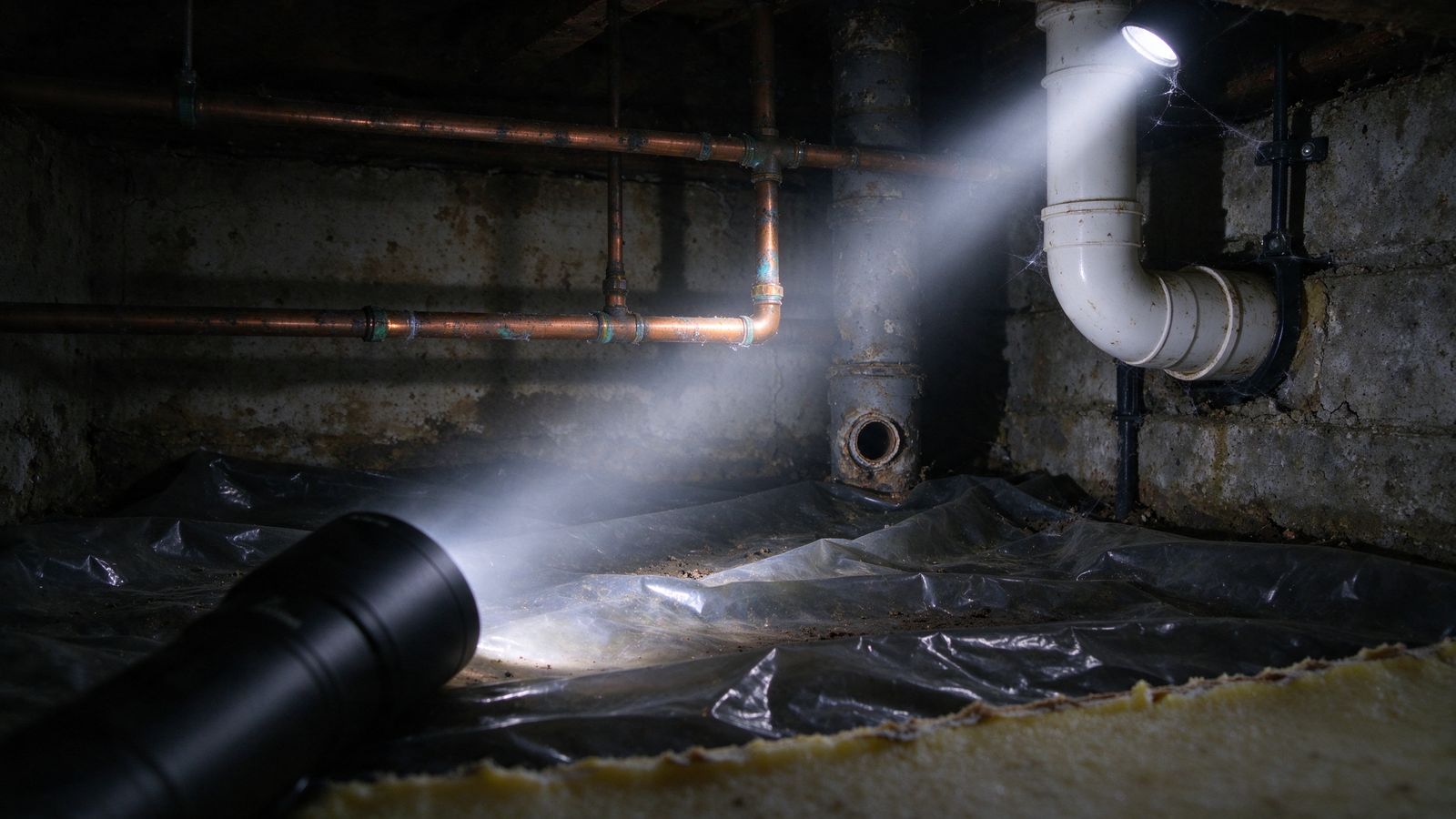
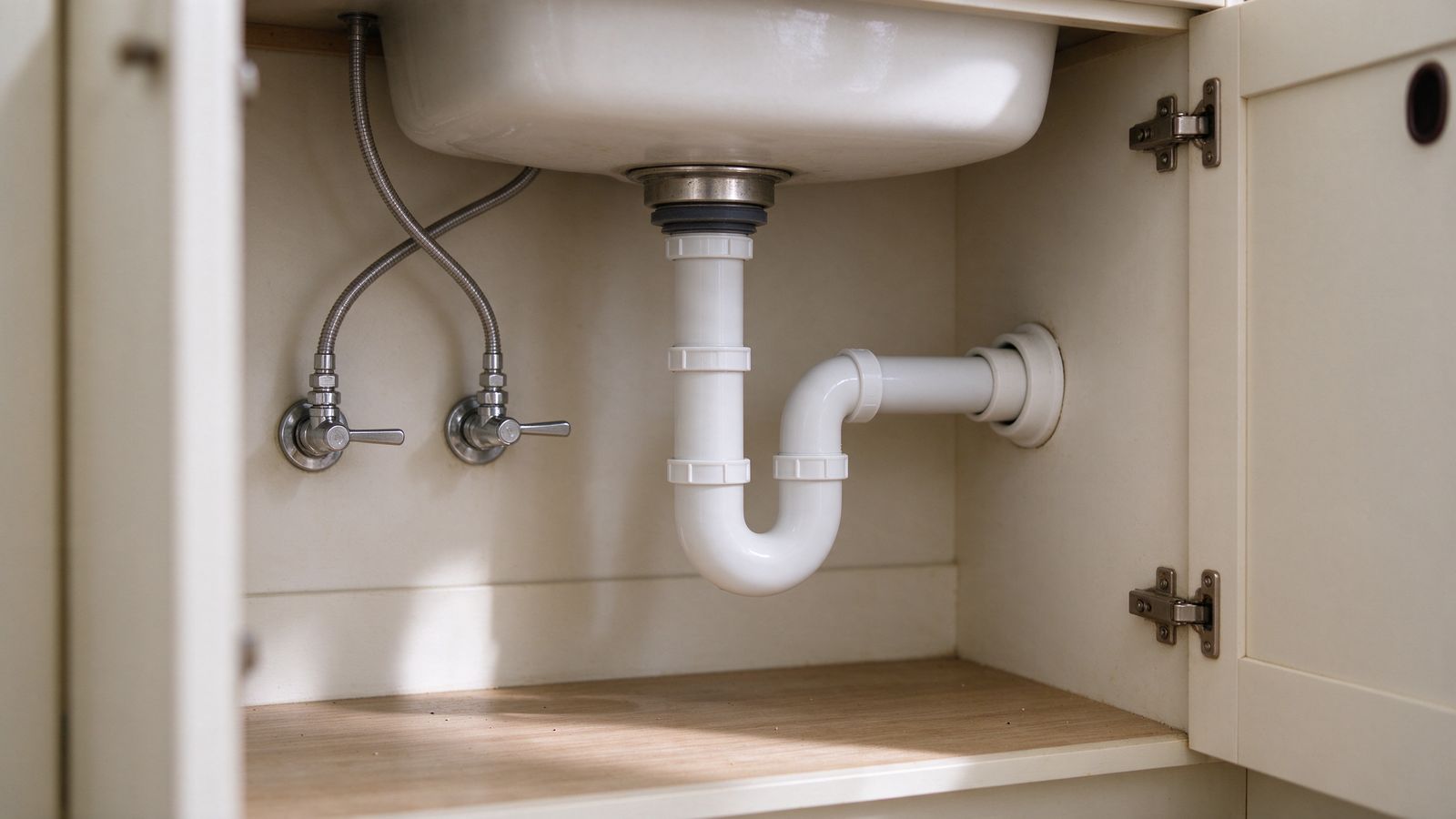
You can identify most pipe without opening a wall. Check exposed runs near the water heater, at the main shutoff, under sinks, in an unfinished basement or crawlspace, and where the main line enters the house. Look at four things: color, whether it is rigid or flexible, how the joints are made (threaded, soldered, crimped or glued), and any printed markings along the side. A small magnet helps too: it sticks to steel, but not to copper, lead or plastic.
Gently scratching a pipe with a coin is a common way to check for lead, but do it only on an exposed section, never on a joint, and wash your hands afterward. If you suspect lead, contact your water utility; many now keep records of service line materials.
Supply Pipe Materials
Galvanized steel
Steel pipe coated with zinc, joined with threaded fittings. It was widely used for water supply in houses built before the 1960s and sometimes later. Over decades the inside rusts and builds up scale, which narrows the pipe and produces low pressure, rusty water and leaks at threaded joints. Galvanized pipe that sat downstream of a lead service line can also hold lead in that scale. Inspectors often recommend evaluation for replacement when they find it.
Copper
Rigid copper has been a standard supply material for decades. It comes in wall thicknesses called Type K (thickest, often underground), Type L and Type M, usually marked with green, blue and red printing respectively. Joints are soldered or, in newer work, made with press fittings. Copper is durable, but aggressive water chemistry can cause pinhole leaks, and blue-green staining at joints is worth a closer look.
Polybutylene
Gray, flexible plastic supply pipe, sometimes marked PB2110, installed from roughly the late 1970s to the mid 1990s. It was the subject of large class-action litigation over failures, which are widely attributed to deterioration of the pipe and fittings over time. Many inspectors flag it on sight, and some insurers ask about it. Replacement decisions belong in a conversation with a licensed plumber.
CPVC
Chlorinated PVC is a rigid, cream or tan plastic rated for hot and cold supply, joined with solvent cement. It does not corrode like metal, but older CPVC can become brittle and crack if it is bent or struck during other work. Do not confuse it with white PVC, which is commonly used for drains and cold-water applications.
PEX
Cross-linked polyethylene tubing, now one of the most common supply materials in new houses and repipes. It is flexible, so long runs need few fittings, and it comes in types labeled PEX-A, PEX-B and PEX-C based on how it is made. Fittings are crimped, clamped or expanded depending on the system. Red and blue colors are only for identification. PEX should not be left exposed to sunlight, and fittings must match the system they were rated with.
Drain, Waste and Vent Materials
Cast iron
Heavy black or rust-colored pipe used for drain and vent stacks in many older houses. Older joints were packed with oakum and lead in a hub; newer no-hub joints use rubber sleeves and steel bands. Cast iron is quiet and can last a long time, but it can crack, scale up inside or rust through along the bottom of horizontal runs. A sewer camera inspection is the usual way to see inside.
ABS and PVC
Plastic drain pipe: ABS is black, PVC is white or off-white. Both are joined with solvent cement and are common in houses built from the 1970s on. Which one you find often depends on region and era. Joining the two requires an approved transition method, which is something an inspector may comment on.
Galvanized drain lines
Some older houses used galvanized steel for smaller drain lines and vents. Like galvanized supply pipe, it corrodes from the inside and tends to clog over time.
A Word on Lead
Lead pipe is soft, dull gray and scratches to a shiny silver. It is most often found as the service line from the street in older neighborhoods. The Safe Drinking Water Act amendments of 1986 banned the use of lead pipe, solder and flux in drinking water systems, but many lead service lines installed earlier are still in the ground. Utilities have been required to inventory service line materials, so your water provider is the best first call. For testing guidance, see the water quality guide.
Identifying pipe is homeowner territory. Cutting into it, repiping, or replacing a service line is work for a licensed plumber, and service line work often involves the utility and a permit.
Pipe Materials Comparison Table
| Material | Look | Typical use | Common concern |
|---|---|---|---|
| Galvanized steel | Dull gray, threaded, magnet sticks | Older supply, some drains | Internal rust, low flow |
| Copper | Copper color, soldered joints | Supply | Pinhole leaks in some water |
| Polybutylene | Gray flexible plastic, often PB2110 | Supply, about 1978 to 1995 | Failure history, insurer questions |
| CPVC | Cream or tan rigid plastic | Hot and cold supply | Brittleness with age |
| PEX | Flexible red, blue or white tubing | Supply, current | Sunlight, mismatched fittings |
| Cast iron | Heavy, black or rusty, hub joints | Drain and vent | Cracks, rust along the bottom |
| ABS | Black plastic, glued joints | Drain and vent | Transitions to other plastics |
| PVC | White plastic, glued joints | Drain and vent | Not for hot supply |
| Lead | Soft dull gray, scratches silver | Older service lines | Health risk; call your utility |
Pipe Material Questions
Should I replace pipe just because it is old?
Age alone is not a diagnosis. Condition, material, water chemistry and how the pipe has been treated all matter. A plumber's inspection, and sometimes a camera on the drains, is a better basis for a decision than the build year.
Is PEX better than copper?
They are different tools. PEX is flexible and resists freeze damage better; copper is rigid, heat tolerant and long proven. Plumbers choose based on the house, local code, water chemistry and the job. Neither is a universal answer.
Why does my inspector care about polybutylene?
Because of its failure history and because some insurers ask about it. An inspection note about polybutylene is a prompt to get a licensed plumber's opinion and to check with your insurer, not necessarily a sign of an active leak.